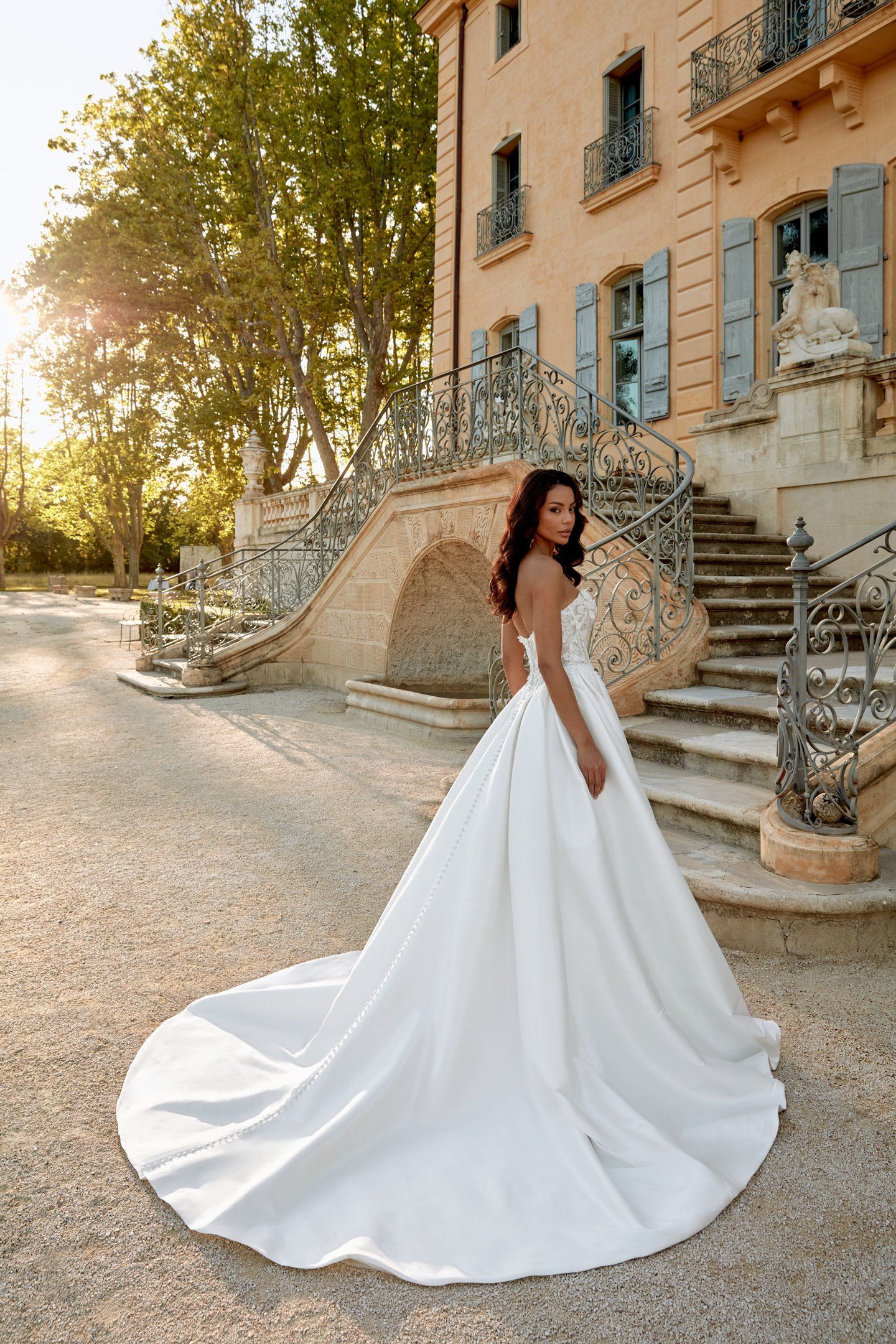
If your dress has a long train, it will look wonderful in the ceremony photos and become a problem the moment the dancing starts. A bustle is how it gets out of your way, so you can move through the venue, hug your guests and dance without anyone standing on your hem.
It’s a question we hear often, and it’s rarely explained clearly, so here’s the plain version.
What a Bustle Actually Is
A bustle is a set of hooks, buttons or ties sewn into the underside of the gown. They catch the train and lift it up and out of the way, so the fabric sits neatly at the back instead of trailing behind you. Done well, you won’t see the mechanism at all; you’ll just see a dress that has changed shape.
Why You Might Need One
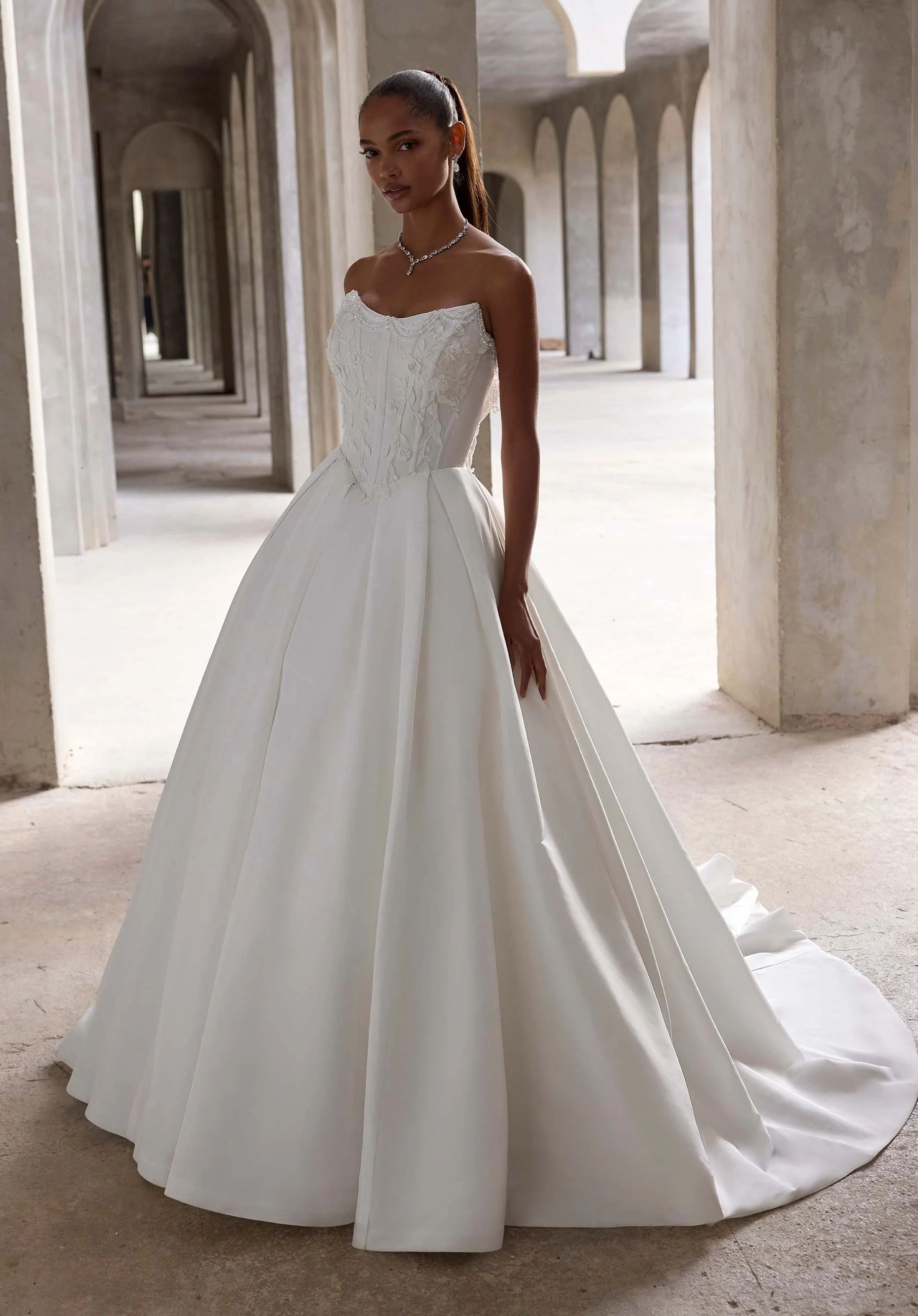
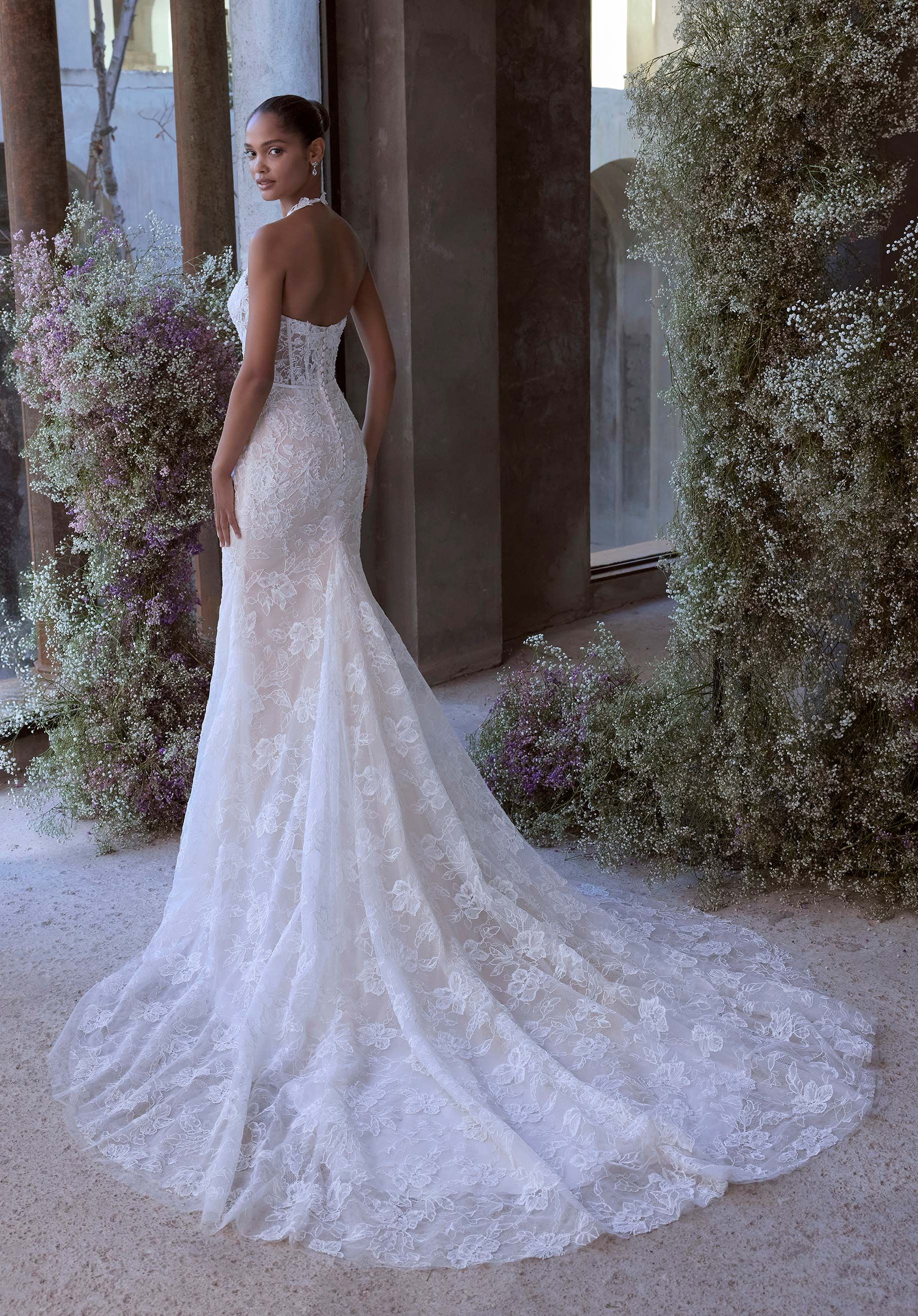
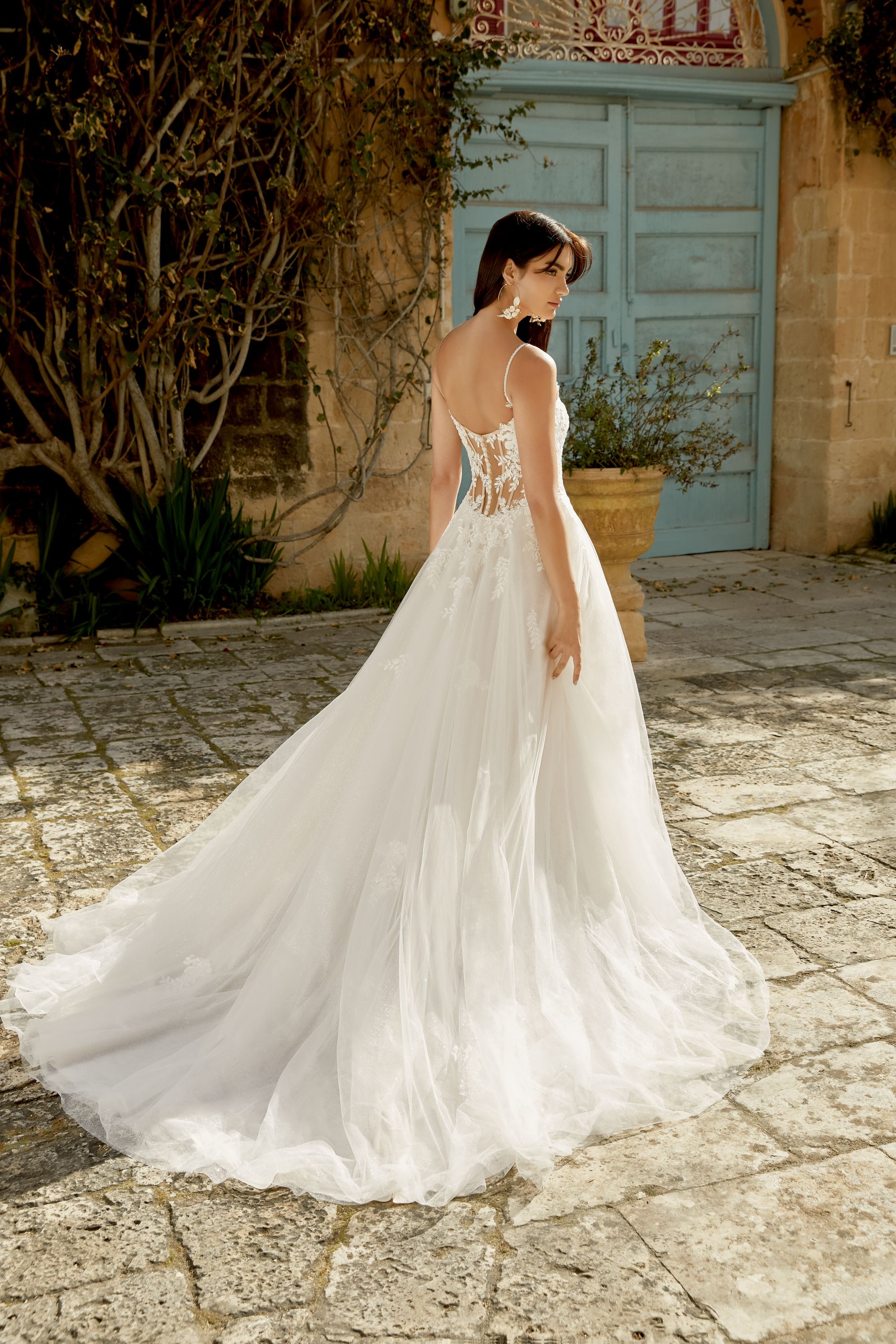
Long trains are gorgeous in photographs, but they’re awkward underfoot at the reception. They catch on chairs, they get trodden on, and they make it hard to walk through a crowded room with a drink in your hand. A bustle solves that problem in a few moments, which is why it’s such a common part of finishing a dress. If you’ve fallen for a dress with a long train, you don’t have to choose between the train and the dancing; you get both.
The Two Styles You’ll Hear About
There are plenty of variations, but two names come up most. A French bustle scoops the train up at the back, creating folds in the fabric. An American bustle pulls the train up so that more of the dress’s own shape is on show. Which one suits you depends on the dress, and neither is better in itself; it’s about what looks right on yours. In practice, your seamstress will be able to tell you what the fabric and the cut allow.
How It Works on the Day
Someone fastens it for you. That’s usually your dress attendant, whether that’s a friend, a family member or a stylist (available as an extra service), and they’ll do it during a quiet moment after the photos. When it’s fastened, the gown transforms, and you can get on with the rest of the day. The train that framed you in the photographs is now tucked out of the way, and nobody has to hold it up for you while you cross the room.
What to Bring to Your Fitting
Wear the shoes you’ll wear on the day. Heel height changes how the train falls and where the hooks should sit, so a bustle set up in flats and then worn with heels can end up in the wrong place. It’s a small thing, and it’s one of the easiest ways to make sure the bustle works for you.
Practise It Before the Day
At your final fitting, ask to see exactly how the bustle fastens. Better still, bring the person who’ll be doing it on the day, so they’ve seen it done once before. If they have to work it out for the first time while a room full of guests waits, it’ll be stressful for both of you, and a little rehearsal prevents that.
Does Every Dress Need One?
No. Sheath and A-line dresses, and short dresses, may not need a bustle at all. Your seamstress will advise you once she sees the dress on you.
An Honest Word on Placement
A well-positioned bustle feels secure and looks refined. A poorly placed one can feel fiddly and pull uncomfortably. That’s the difference between forgetting it’s there and spending the evening adjusting it, so it’s worth choosing a seamstress who’s experienced with bustles, and asking to try the fastening yourself.
Remember that we’re a destination boutique, so the alterations themselves are done by a seamstress local to you, near your home. You’ll be with us to find the dress, and with her to make it fit and move the way you want.
If you’d like to see how a bustle could work on your dress, come and try dresses with us, then look for a seamstress near you who’s experienced with bustles. Call us on 01206 577756 or book your appointment at serenitybrides.com/book.