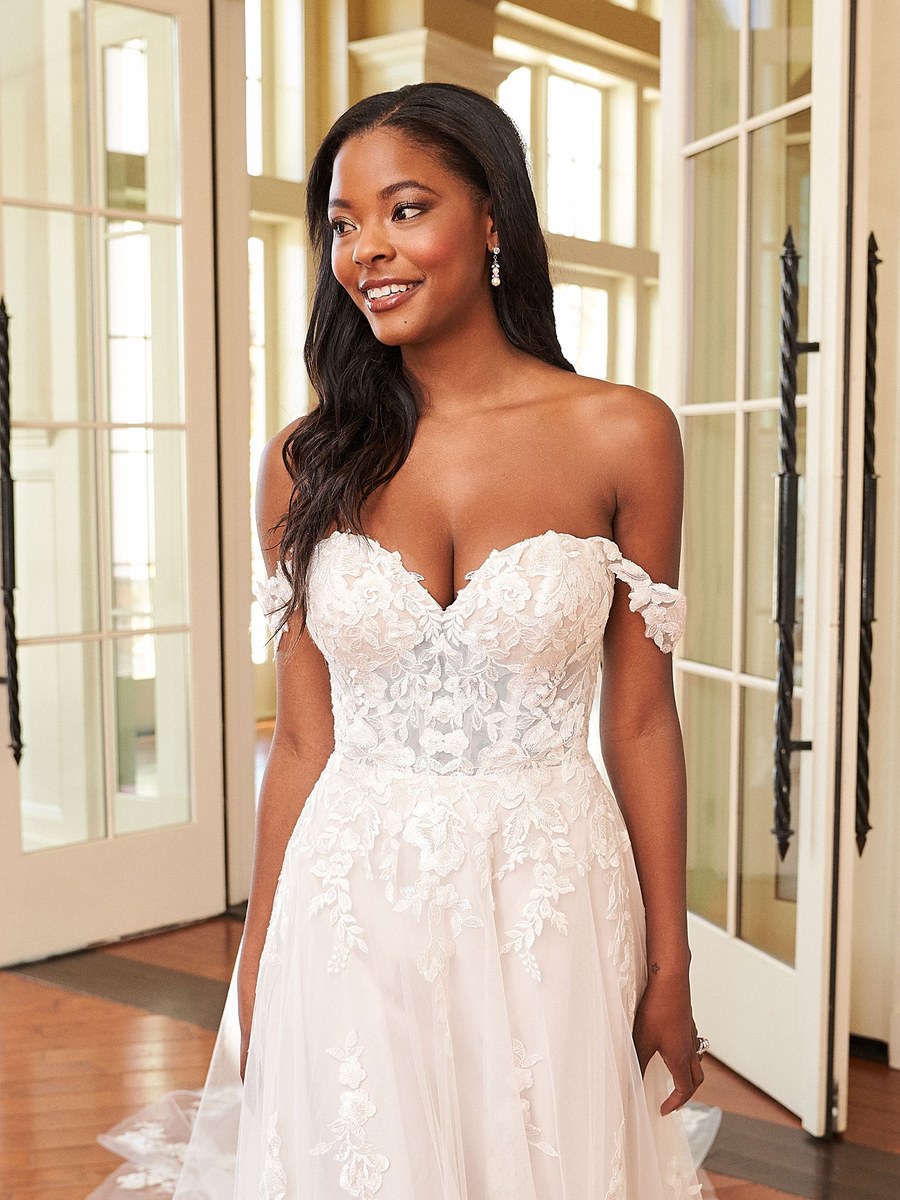
There is no single right answer, and we think that is rather freeing. The most common paths are to have it professionally cleaned and preserved, to store it carefully, to give it a new life through dyeing or restyling, to donate or sell it, or to keep it in good condition to pass on one day. What matters is that whatever you choose, you choose it thoughtfully — because this dress meant something, and that meaning does not diminish whatever form it takes next.
Have it professionally cleaned and preserved
This is often the first step regardless of your longer plan, and it matters more than many brides realise. Even if your dress looks pristine, a wedding day leaves invisible marks — perspiration, champagne, traces of food, traces of the ground if your hem brushed the floor. These are not always visible immediately, but they set and discolour over time. Professional wedding dress cleaning is a specialist service, quite different from ordinary dry cleaning, so seek out a firm with specific experience in bridal gowns. Ask about the preservation process too — many will pack your dress into an acid-free box with acid-free tissue, protecting the fabric from yellowing over years and decades.
Store it with care
If you are handling storage yourself, a few principles serve you well. Keep the dress in a cool, dry place away from direct light — sunlight and even artificial light can yellow fabrics over time, particularly silk. Avoid plastic bags, which trap moisture, and opt for breathable fabric covers or an acid-free box instead. Attics and garages are rarely ideal because of temperature fluctuation; a wardrobe in a stable room is much better.
Give it a new life
Some brides cannot bear the thought of their dress sitting in storage indefinitely. Having it dyed is one option — a champagne or ivory gown transformed into deep navy or soft sage becomes something entirely different, wearable at a summer party or simply a Tuesday evening. Shortening the skirt to cocktail length achieves something similar, and if your dress has a removable skirt or detachable train you may already have the bones of two looks. Others convert their dress into something else altogether — a christening gown for a future child, a framed artwork, a piece of keepsake jewellery. These require a skilled seamstress, but the results can be extraordinarily moving.
Donate, sell, or pass it on
If you know in your heart the dress will never leave the box, there is something genuinely generous in passing it on. Some charities that accept donated gowns fund cancer research or support brides who could not otherwise afford a dress. Selling is another option — the market for pre-loved dresses is healthy, and a well-maintained designer gown can fetch a meaningful amount. And if there is a daughter, niece, god-daughter or younger sister in your life, the idea of passing your dress to her one day is one many brides find quietly wonderful. It is not something to plan rigidly, but if the thought makes you smile, keep the dress in good enough condition that the option stays open.
Whatever you choose, the meaning lives on — in the photographs, in the memories, and in the way you felt when you first knew it was the one. If you have not yet found that dress, we would love to be the place where it all begins. Call us on 01206 577756 or book your appointment. Browse the bridal collection.